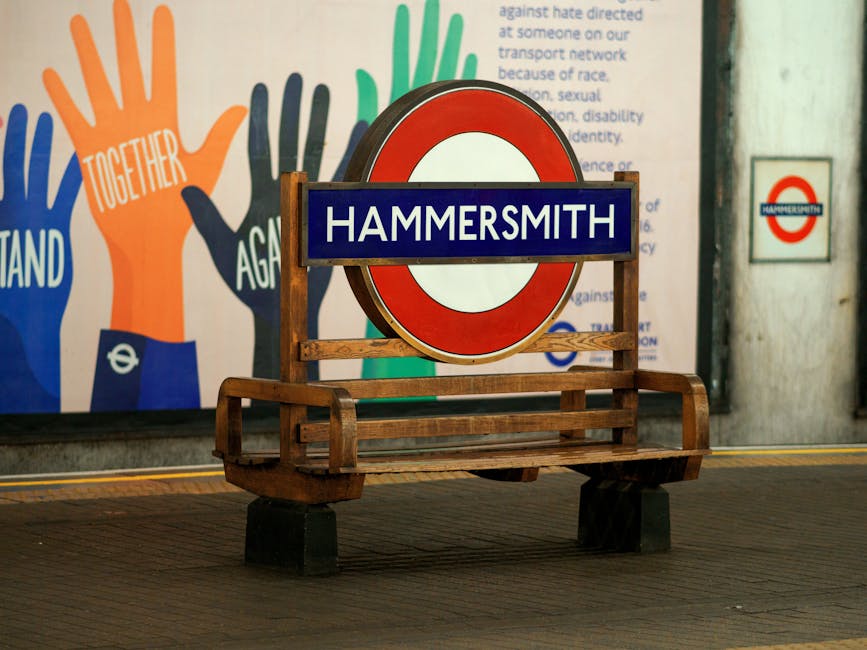
King Street Hammersmith Rubbish Clearance Tips for Tight Access

If you are dealing with rubbish clearance on King Street in Hammersmith, tight access can turn a simple job into a bit of a puzzle. Narrow stairwells, shared hallways, awkward parking, heavy items, and that one corner you always seem to bash your shoulder on - it all adds up. The good news is that with the right approach, even a cramped clearance can be handled smoothly, safely, and without the usual drama.
This guide brings together practical King Street Hammersmith rubbish clearance tips for tight access, with a focus on planning, safety, and making the job less stressful. Whether you are clearing a flat, removing old furniture, handling builders waste, or just trying to get a lot of stuff out of a space that was clearly not designed for it, you will find useful, grounded advice here.
To make things easier, the article covers what matters most, how clearance works in restricted spaces, common mistakes to avoid, and the best ways to prepare. A little planning goes a long way. Honestly, sometimes it is the difference between a job that feels frantic and one that is surprisingly calm.
Why King Street Hammersmith Rubbish Clearance Tips for Tight Access Matters
King Street and the surrounding Hammersmith streets often bring together the exact ingredients that make rubbish clearance tricky: older buildings, compact entrances, shared access routes, limited turning space, and busy local traffic. If you have ever tried to carry a wardrobe down a narrow staircase while someone is coming the other way with shopping bags, you will know the feeling. Not ideal.
Tight access matters because it affects almost every part of the job. It changes how you assess the waste, what equipment you bring, how many people you need, how long the clearance takes, and whether an item can be removed in one piece or must be dismantled first. It also affects safety. A bulky sofa or broken cupboard can block a landing, scrape walls, and create avoidable risk if it is rushed.
For homes, flats, small offices, and mixed-use premises, the main challenge is not usually the amount of waste. It is getting that waste out without damaging the property or making life difficult for neighbours. In a place like King Street, where there is often little room to manoeuvre, that practical reality becomes even more important.
There is also the question of timing. In busy streets, a clearance that could take 20 minutes in a driveway sometimes takes far longer once access, parking, and carrying distance are factored in. That is not a failure; it is just the reality of working in a compact urban setting.
Expert summary: Tight access jobs are won before the first item moves. Accurate access checks, sensible dismantling, and a clear route are what keep a clearance efficient and calm.
How King Street Hammersmith Rubbish Clearance Tips for Tight Access Works
In a tight-access clearance, the process usually starts with a careful look at the space, not a truck arriving and hoping for the best. That might sound obvious, but you would be surprised how often problems start when the access route is guessed instead of checked.
A good clearance team will usually think in terms of three stages: assess, prepare, and remove. The assessment stage looks at what needs to go, how big it is, where it sits, and how it can be taken out safely. Preparation means protecting floors, checking lift or stair access, and deciding whether items need to be broken down. Removal is the actual lifting, carrying, loading, and sorting for recycling or disposal.
For residents and businesses on King Street, the best results usually come from sharing as much detail as possible in advance. Mention narrow hallways, basement steps, fire doors, low ceilings, awkward corners, shared entrances, parking limits, and whether access is via front, rear, or side passage. Small details matter. A lot.
It also helps to think about the type of waste. Furniture, mixed household waste, builders rubble, office clear-outs, and appliance removal each bring different handling needs. If a fridge or freezer is involved, for example, it is sensible to use a specialist service such as fridge and appliance removal rather than treating it like ordinary rubbish. Likewise, if the job includes sofas, mattresses, or large cushions, a dedicated service like mattress and sofa disposal can make things far easier.
That sort of matching-up helps avoid breakage, delays, and the classic "this looked smaller on the phone" problem. Truth be told, a tape measure and a few honest photos are worth their weight in gold.
Key Benefits and Practical Advantages
When you plan a rubbish clearance properly for a tight-access property, the benefits are not just about speed. The real gain is control. You know what is moving, how it is moving, and what needs to happen before anyone starts lifting.
- Less risk of damage: Walls, bannisters, corners, and floors are easier to protect when the route is planned in advance.
- Safer lifting: Heavy items can be dismantled, shared between more people, or carried in the right order.
- Faster job completion: The team spends less time improvising and more time clearing efficiently.
- Lower stress for residents or staff: Everyone knows the plan, which makes the day feel much less chaotic.
- Better waste separation: Reusable, recyclable, and non-recyclable materials can be sorted more cleanly.
- Cleaner exit route: Floors and shared areas stay tidier when movement is deliberate rather than rushed.
There is also a practical financial side. In many cases, better preparation can reduce wasted labour time. If access is difficult but the items are easy to move once partially dismantled, the whole job becomes more efficient. A loose shelf, for example, may take a minute to remove, but that minute can save a lot of awkward shuffling later on.
For business premises, these advantages matter even more. Offices, clinics, and retail spaces need clear access kept open for staff and customers. A messy, stop-start clearance can interrupt the day. A structured one tends to disappear into the background, which is exactly what you want.
Who This Is For and When It Makes Sense
These tips are useful for just about anyone dealing with clearance in a compact or awkward space, but they are especially relevant if you live or work in a building where large items do not move freely. That includes upper-floor flats, converted houses, basement properties, mews-style layouts, and offices with stair-only access.
You may find this particularly helpful if you are:
- moving out of a flat on or near King Street
- clearing out rented rooms or shared accommodation
- disposing of old furniture after a refurb
- managing builders waste in a narrow access route
- emptying a loft, garage, or storage room with limited headroom
- running a small business and need quick, tidy removal
- trying to avoid disruption to neighbours, customers, or staff
It also makes sense whenever the items are awkward rather than just numerous. A single heavy wardrobe can be more challenging than ten bags of general waste. Same goes for broken appliances, office cabinets, and long countertop sections. The shape can be more troublesome than the weight.
For fuller property clearances, it may be worth looking at broader services such as flat clearance, home clearance, or office clearance, depending on what you need removed. If the job involves a full property rather than a single room, house clearance or loft clearance may be a better fit.
Step-by-Step Guidance
If you want the clearance to run smoothly, the best approach is simple and methodical. Nothing fancy. Just careful work.
- Measure the access route. Check door widths, hallway turns, stair landings, lift size, and any awkward bottlenecks. If a large item is close to the limit, assume it needs dismantling until proved otherwise.
- Identify the waste type. Separate furniture, bagged rubbish, electrical items, builders waste, and anything hazardous. This helps decide what can be carried together and what needs special handling.
- Take photos before the job. A few clear pictures of the items and the route help avoid misunderstandings. They are especially useful when parking or access is very tight.
- Clear the route first. Move shoes, boxes, planters, buggies, and anything else that could snag or trip someone. You want a clean path, not a maze.
- Protect surfaces. Use floor coverings, corner guards, or blankets where needed, especially on painted walls and polished floors.
- Dismantle bulky items if sensible. Tables, bed frames, shelving, and some wardrobes often move much better once broken into smaller parts.
- Keep loading order simple. Load the easiest-to-carry items first, then the heavier or more awkward pieces. That keeps momentum and avoids blocking the route.
- Separate items for recycling. Wood, metal, cardboard, and clean reusable items are easier to manage when they are not mixed into one giant pile.
- Leave a clear finishing space. A small area for final sweep-up and checks is useful. It helps the job end cleanly, not in a scramble.
If you are not sure where to start, think of it like clearing a path through a crowded kitchen before moving anything hot. You create the route first. Then you move. Simple, but effective.
Expert Tips for Better Results
Here is where the little practical details start to matter. They are not dramatic, but they save time and reduce hassle. In our experience, these are the bits people remember after the job is done.
1. Use photos and measurements, not estimates
A guess is rarely enough for tight access. Door frames, stair width, landing size, and item dimensions should all be checked. A wardrobe that seems fine in the hallway may be impossible on the final turn. It happens more often than people like to admit.
2. Think in terms of routes, not just items
The item itself is only half the story. The route matters just as much. A light chair can be more awkward than a heavier item if it catches on a banister or has to be angled down a narrow stairwell.
3. Break down items before the team arrives, if safe
Some simple preparation, such as removing drawers, unscrewing legs, or emptying cabinets, can make the job far smoother. Just do not force anything that might splinter or trap fixings. That is how little problems become bigger ones.
4. Separate valuables, documents, and keepers early
Mixed clearances often slow down because someone spots a folder, charger, or bit of hardware halfway through. Keep the "not going" pile separate from the start. It sounds obvious, but in a busy room it is easy to miss.
5. Leave enough space to pivot
People often think only in straight lines. Yet the issue is usually the turn. If a large item needs to rotate on a landing or in a corridor, you need a little more room than the bare doorway width. That tiny bit of extra space can be the difference between smooth and stuck.
6. Ask about specialist handling where relevant
Appliances, mattresses, and sofas can need different handling from standard household rubbish. For example, old appliances may be best dealt with through specialist appliance removal, while mixed waste from a renovation may fit better under builders waste clearance.
Small aside: if a clearance route looks just about manageable, it probably needs more thought, not less. Tight access is rarely generous the second time you test it.
Common Mistakes to Avoid
Most access problems are preventable. The trouble is that when people are rushed, they default to "we will figure it out when we get there." Sometimes that works. Quite often, it does not.
- Not checking the narrowest point: The widest item is not always the issue; the narrowest turn usually is.
- Leaving access prep until the last minute: Coats, bikes, bins, plant pots, and hallway clutter get in the way more than people expect.
- Underestimating lifting difficulty: Weight is one thing, but shape, grip, and balance can make an item much harder to handle.
- Mixing waste types together: That makes sorting harder and may complicate disposal, especially for electricals or hazardous materials.
- Ignoring neighbour or building rules: Shared spaces need a little extra care. Noise, blocking entrances, and loading times can matter.
- Forgetting parking and loading distance: A short walk from vehicle to property is lovely. A long one with several large items is not.
- Trying to force a fit: If an item does not move cleanly, pause and reassess. Forcing it often creates damage to both the item and the property.
Another common one: people empty the room but forget the route out of the room. Then everyone is standing there, item in hand, looking at a blocked corridor like it might solve itself. It won't.
Tools, Resources and Recommendations
You do not need a warehouse full of kit to handle tight-access rubbish clearance well. A few practical tools, plus a sensible plan, usually do the job.
| Tool or resource | Why it helps | Best used for |
|---|---|---|
| Measuring tape | Checks doorways, stairs, and item dimensions accurately | Planning before moving anything |
| Protective blankets or floor covers | Reduces scuffs and impact marks | Narrow hallways, stairs, and landings |
| Sack truck or dolly | Improves handling of boxes and some smaller items | Short runs with stable loads |
| Basic tools for dismantling | Helps reduce bulky furniture into manageable parts | Beds, shelving, desks, and tables |
| Strong sacks or containers | Keeps smaller waste controlled and easier to lift | Bagged rubbish and mixed light waste |
| Photos of access points | Gives a clearer picture before the team arrives | Quotes, planning, and awkward properties |
For readers comparing different clearance needs, it can also help to understand related services. If you are clearing a garage, garage clearance may be more suitable. If the job is mostly outdoor cuttings, garden clearance is the better match. For general mixed waste, waste removal is often the broadest category.
If you are comparing what can go into a container or load, the page on what can go in a skip is a useful companion read. It helps set expectations, even if skip hire is not the route you end up choosing.
Law, Compliance, Standards, or Best Practice
For rubbish clearance, especially where access is tight and the waste mix is varied, good practice matters just as much as speed. You do not need to become a legal expert, but you do need to handle waste responsibly and avoid cutting corners.
In the UK, waste should be managed by people who understand what they are taking, where it is going, and whether anything needs special handling. Hazardous items, electricals, broken glass, sharps, and contaminated materials should never just be bundled in with ordinary rubbish. If a load contains anything unusual, it is safer to deal with it through the appropriate route, such as hazardous waste disposal.
There is also a practical duty of care angle. Even without getting technical, the basic expectation is simple: waste should be sorted, transported, and disposed of properly. That means care with recyclables, care with confidential material, and care with anything that could pose risk during lifting or transport. If paperwork or sensitive files are involved, confidential shredding is the safer choice.
Insurance and safety should not be treated as afterthoughts either. Tight-access work has more opportunity for small accidents - a scraped wall, a strained lift, a dropped corner on a stair turn. It is sensible to check insurance and safety arrangements and look for a service that clearly takes the subject seriously. Likewise, a clear health and safety policy is a good sign that the work will be handled properly.
For customers who care about reuse and responsible disposal, it is also worth looking at recycling and sustainability. Tight-access clearance does not have to mean wasteful clearance. In fact, with the right sorting, it can be more efficient and cleaner than a rushed job in a wide-open space.
Options, Methods, or Comparison Table
There are a few ways to approach rubbish clearance in a tight-access property. The right option depends on how much waste you have, how awkward it is, and how much time or manpower you want to spend.
| Method | Best for | Pros | Limitations |
|---|---|---|---|
| DIY clearance | Small, light loads with easy access | Lower immediate cost, full control | Hard work, risk of damage, time-consuming |
| Skip-based approach | Projects with enough space for loading | Good for ongoing waste generation | Less suitable when access is very restricted |
| Man-and-van style clearance | Mixed waste, furniture, and limited space | Flexible, labour included, easier in awkward buildings | Needs clear access information to avoid delays |
| Specialist item removal | Fridges, sofas, mattresses, or other bulky single items | Handled more appropriately and efficiently | Not ideal for large mixed clear-outs |
For many King Street properties, a flexible removal service is the most practical option, because it adapts to the building rather than forcing the building to adapt to the waste. That is usually the smarter path in a compact part of London.
If you are clearing a business space rather than a home, business waste removal is worth comparing with office or general waste options. It can be especially useful when you need a quick, tidy turnaround with minimal disruption.
Case Study or Real-World Example
Picture a typical first-floor flat off King Street. The property has a narrow communal hallway, one tight staircase, and a landing that turns sharply halfway down. The residents need to clear an old wardrobe, a broken sofa, several bagged items, and a small pile of mixed household waste before moving day.
On paper, it sounds manageable. In reality, the wardrobe is the problem. It is too long to carry upright, too wide to swing around the stair bend, and too awkward to tilt without hitting the wall. The team measures the route, removes the wardrobe doors, takes the top and base apart, and carries the sections individually. The sofa is then moved separately, with blankets protecting the stairwell. Bags go last, so the route stays open.
The whole job is slower than a straightforward driveway clearance, but it is calm, clean, and controlled. No scraped paint. No wobbling at the stair turn. No last-minute panic. That is really the point.
In another example, a small office near the same stretch of road needs old desks, filing units, and a few electrical items removed after a refit. Because the lift is narrow and the reception area must stay usable, the team splits the work into short carrying runs, keeps the route tidy, and separates items for recycling where possible. It is not glamorous, but it works - and the staff can keep on with their day.
Practical Checklist
Use this before the clearance starts. It saves awkward surprises.
- Measure all doors, stair turns, corridors, and lifts
- Photograph the access route and the waste items
- Identify any items needing dismantling
- Remove clutter from the route out
- Protect floors, corners, and walls where needed
- Separate recyclables, keepers, and general waste
- Check for appliances, hazardous items, or confidential material
- Confirm parking or loading arrangements
- Decide whether the job is a flat clearance, furniture clearance, or general waste removal
- Make sure the final exit path stays clear until the job is finished
If you can tick most of those off, you are already ahead of the game. Seriously.
Conclusion
King Street Hammersmith rubbish clearance tips for tight access come down to one simple idea: plan the route as carefully as you plan the load. In compact buildings, the easiest-looking job can become awkward if access is not checked properly, while a clearly prepared clearance can run with surprising ease.
The best results usually come from honest measurements, sensible dismantling, a clear route, and the right type of removal for the waste involved. If you are dealing with bulky furniture, awkward appliances, mixed rubbish, or a full property clear-out, matching the service to the space matters more than trying to force a one-size-fits-all approach.
And if the job feels a bit much, that is fair enough. Tight-access clearances are fiddly. They need patience, not bravado. A calm plan almost always beats a rushed lift.
For more background on the people behind the service, you can also read about us, or review the practical details in the pricing and quotes information before you decide next steps.
Get a free quote today and see how much you can save.
Clear access makes the whole day breathe a little easier, and sometimes that is the real win.
Frequently Asked Questions
What makes rubbish clearance on King Street difficult?
The main issue is often access rather than volume. Narrow hallways, staircases, shared entrances, parking limits, and older building layouts can all make carrying waste out more complicated than expected.
Should I measure my doorway before booking a clearance?
Yes. Measuring door widths, stairs, and awkward turns helps avoid surprises. It is one of the simplest ways to make sure large items can leave safely.
Can furniture be removed from a flat with tight stairs?
Usually yes, but some items may need to be dismantled first. Sofas, wardrobes, and bed frames often move much better once broken down into smaller parts.
What if the item does not fit through the hallway?
If it cannot be moved safely in one piece, dismantling is often the best answer. If that is not practical, a specialist removal approach may be needed.
Is a skip a good idea for tight-access properties?
Sometimes, but not always. If loading space or roadside access is limited, a skip may be awkward. In those cases, a flexible removal service can be more suitable.
What should I do before the removal team arrives?
Clear the route, separate items, take photos, and move anything fragile or valuable out of the way. The more open the access path, the easier the clearance.
How do I know if I need builders waste clearance instead of general rubbish removal?
If the waste includes rubble, plasterboard, timber offcuts, packaging from works, or renovation debris, builders waste clearance is usually the better fit.
What happens if there is a fridge or freezer in the load?
Appliances are best handled separately, because they can need different treatment from ordinary household rubbish. Specialist appliance removal is often the safer and cleaner route.
Can confidential papers be put in with the rest of the waste?
They should not be mixed in casually. If you have files or sensitive paperwork, confidential shredding is the more responsible option.
Does tight-access clearance take longer than normal clearance?
Often, yes. More care is needed around corners, stairs, and shared spaces, so the work may take longer even when the actual amount of waste is fairly small.
What is the safest way to move bulky items downstairs?
Use a clear route, appropriate lifting technique, and enough people for the item. If an item feels unstable or awkward, pause and reassess rather than forcing the move.
How do I prepare a business property on King Street for clearance?
Keep walkways open, separate items by type, and plan around staff or customer movement. For more structured commercial jobs, business waste removal is often the right starting point.
Where can I find more information about your service standards?
You can review the health and safety policy, insurance and safety, and recycling and sustainability pages for more background on how the work is handled.
What is the best first step if I am not sure what service I need?
Start by identifying the type of waste and the access conditions. From there, compare the most relevant service pages, such as furniture clearance, flat clearance, home clearance, or waste removal, and choose the option that fits the space rather than forcing the other way around.