Commercial Waste Removal in Hammersmith
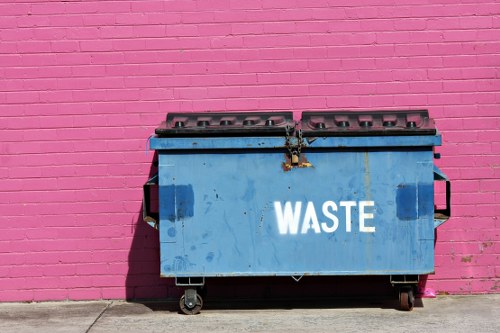
Commercial waste removal in Hammersmith should be straightforward, responsible and suited to the way local businesses actually work. We handle the removal of mixed business waste, bulky items, office contents and recyclable materials for premises that need a tidy, organised clear-out rather than an improvised lift and shift. The focus is on practical collection, sensible sorting and a service that helps you keep on top of space, access and disposal without disrupting day-to-day operations.
Our business waste removal service covers routine clearances as well as one-off jobs, with work planned around items such as desks, chairs, storage units, packaged office waste and general non-hazardous refuse. If you are clearing a unit, refurbishing a workplace or simply making room for new equipment, we can remove the load in a way that keeps the process orderly and manageable.
For businesses that want a simpler starting point, the pricing and quotes page can help you think through the information needed for a quotation. Contact us when you are ready and we can discuss the type of waste, the access involved and the most suitable arrangement for your collection.
What our commercial waste service handles
Commercial waste removal is rarely just about moving bags from one place to another. It often involves separating different item types, handling awkward furniture, dealing with storage that has accumulated over time and making sure the job is completed with enough care for the building and its users. We work with businesses that need a practical clear-out rather than a temporary fix, so the service is built around removing items efficiently while keeping the site usable.
The kinds of waste we are commonly asked to remove include office furniture, filing cabinets, shelving, packing materials, fixtures that are no longer needed and mixed rubbish from a back room or store. Where a site has more than one type of item, it is often useful to plan the collection in stages. That can make it easier to identify what should be taken, what should stay on site and what needs separate handling because it falls into a different waste category.
If your premises contain bulky or awkward items, the safest approach is usually to organise removal with access in mind. Door widths, stairs, lifts, loading areas and timings all affect how the work is completed. Clear access notes help reduce delays and keep the process calm, especially where staff, customers or other contractors are using the same building.
Office clearances and workplace furniture
Office waste can build up gradually, from redundant desks and chairs to old cabinets, monitors, cables and general paperwork holders. Our office clearance service is suited to workplaces that are reorganising, downsizing or replacing fittings and furniture. It can also be useful after a lease-end tidy-up, a move to different premises or an internal refresh where storage and furniture need to be removed in a controlled way.
We also handle items that sit between general waste and furniture removal, including mixed office contents that need a more selective approach. Where possible, the aim is to separate reusable or recyclable material from general rubbish, then remove the remaining load so the room or floor can be returned to use. That approach is particularly helpful in shared buildings where disruption must be kept to a minimum.
When a workplace collection is being arranged, a simple item list can help. It does not need to be complex: a rough count of large items, an outline of access and any specific concerns about lifts, parking or timing is often enough to shape the job. Request a quotation once you have those details ready, and we can talk through the next step.
Bulky items, fixtures and unwanted equipment
Many commercial clearances include pieces that are too heavy or awkward to be left for ordinary waste streams. We remove bulky items such as furniture, reception fittings, cupboards, storage units and other non-hazardous equipment that no longer fits the needs of the business. The work is organised so the items can be taken out without turning the premises into a long-term storage area for unwanted objects.
Where equipment is involved, the key decision is often whether the item is to be removed as general bulky waste or as a specific appliance or specialist object. That distinction matters because different items may need different handling and separation. Our approach is to keep the collection practical: sort the load, remove what has been agreed and leave the site in a condition that makes follow-on work easier.
For larger clear-outs, it helps to decide in advance which rooms, cupboards or storage zones are included. A precise scope avoids uncertainty once the team arrives, particularly when there are items that should stay in place, fixtures that are not being removed or products that need a different disposal route. Send a clear list first if you can, then book the collection when the scope is settled.
Recycling, segregation and responsible disposal
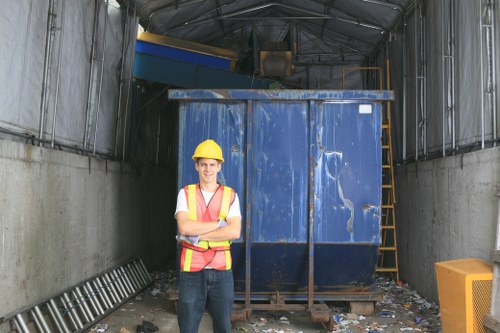
A commercial waste service is more useful when it supports good sorting rather than simply moving mixed material away. We look at the collection as a process of separating what can be diverted from general disposal and what needs to be treated as ordinary waste. That may include cardboard, metal, office equipment, furniture components and other materials that can sometimes be separated before the final load is removed.
Our recycling and sustainability page explains more about how waste can be considered before it leaves the premises. For businesses, the main benefit of this approach is clarity: you know what is being removed, what is being grouped together and how the collection is being organised around the items present on site. This is especially useful when a clearance includes both working items and discarded material.
Not every job is a full strip-out. Sometimes the better option is a focused removal of a defined pile, with the remainder left untouched. That can suit landlords, managing agents and business owners who want a measured service rather than a broad clear-out. In those cases, the key is still the same: accurate description, careful sorting and a collection plan that matches the real contents.
About Hammersmith
Hammersmith is a district in west London on the north bank of the River Thames, and it is often understood as both a busy commercial centre and a residential area with a strong transport identity. Hammersmith Bridge links the district to Barnes across the river, although the current bridge has had a long and complex closure history because of structural concerns. The area sits within the London Borough of Hammersmith and Fulham and contains a mixture of streets, civic buildings and riverside frontage that reflect its growth from a historic Thames-side settlement into an urban centre. The transport interchange at Hammersmith is one of the best-known features of the district, bringing together several Underground lines and bus routes, and helping define the area as a working hub rather than a purely local high street. The Thames Path runs nearby and gives walkers a continuous riverside route, while Furnival Gardens provides open space with views across the water. Hammersmith’s cultural life has long been associated with theatre and performance, with venues such as the Hammersmith Apollo drawing large audiences and adding to the district’s profile. The area also includes a range of office, retail and hospitality premises, alongside Victorian and later housing, so it presents a layered streetscape rather than a single uniform character. That mix of uses is part of what makes Hammersmith feel varied from street to street, with busier roads, quieter residential pockets and river-facing landmarks sitting close together.
Household-style clearances for business premises
Some commercial premises contain items that are not quite office waste and not quite building rubble: old domestic-style furniture in staff areas, storage from a previous tenant, or mixed contents in upper rooms and basements. Our house clearance and flat clearance pages cover those kinds of contents where they are being removed from a property used by a business or landlord. The aim is still the same: clear the agreed items carefully and leave the space easier to manage.
These services are often relevant where a property has been used in more than one way over time. A ground-floor shop with accommodation above, a converted building with old furnishings or a managed property with left-behind contents can all need a more adaptable clearance than standard rubbish removal. In those cases, the service has to work around furniture, soft furnishings and mixed contents without assuming everything belongs in the same category.
When you are deciding whether a room needs a full clearance or only partial removal, it can help to think in terms of zones: what stays, what goes and what must be kept accessible. That makes it easier to describe the job clearly and avoids confusion once the collection is arranged. If the contents are varied, measurements are less important than a plain description of the items involved.
Specialist item removal

Some waste streams need a more specific approach than general commercial rubbish. We remove selected household and business items through services such as fridge and appliance removal, furniture disposal and mattress and sofa disposal. These are useful when a business, landlord or managing agent needs certain items taken away separately from the rest of the clearance.
Appliance and furniture removal can be part of a larger job or arranged as a focused collection for one or two bulky pieces. In either case, the practical concern is whether the items can be lifted safely, moved without damage and taken away under the right disposal route. Larger items often need more planning than ordinary waste, so it helps to be clear about the quantity, condition and location of the pieces before the work is booked.
For anything that feels closer to a specialist item than general rubbish, it is usually better to describe it plainly rather than lumping it in with the rest of the load. Get in touch to request a quotation and we can discuss the items, the access and the collection type that best fits the job.
Garden, garage and storage clear-outs
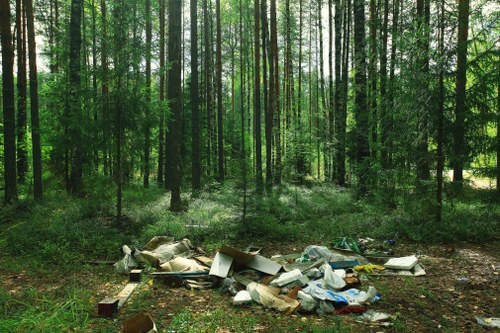
Business premises often include outdoor or storage areas that gather waste more quickly than interior rooms. Our garden clearance and garage clearance services can be useful where the site includes yard space, plant areas, outbuildings or a locked room full of forgotten stock and miscellaneous items. These spaces tend to contain a mixture of bags, broken fixtures, boxes, tools and weathered materials that are easier to remove in one organised visit.
Storage clear-outs are usually most effective when the scope is kept specific. A garage or yard may contain both items to be kept and items to be taken, so the collection works best when those differences are clear before the visit. We can then remove the agreed materials while avoiding confusion about equipment, trade materials or belongings that should remain in place.
Where these areas are attached to active premises, the main decision is often timing. It may be better to clear the space before deliveries, after trading hours or during a quieter part of the week. That kind of planning is not about speed alone; it is about making sure the collection sits neatly alongside the way the property is used.
How to prepare a quotation
A good quotation starts with a clear description of what needs to be removed. For most commercial waste removal jobs, it is enough to note the item type, the approximate amount, the floor level and any access issues such as narrow stairways, lifts or loading restrictions. If the premises are busy, it also helps to mention the best time for collection so the work can be set around operations rather than interrupting them unnecessarily.
The pages on book online and pricing and quotes give a simple route for anyone who wants to move from enquiry to arrangement without overcomplicating the process. Where there are several different waste types, it is sensible to separate them in your notes so the collection can be matched to the right category. That is especially useful if you have a mix of furniture, appliances and ordinary rubbish.
Once you have a workable description, the final step is straightforward: make contact, confirm the scope and ask for the quotation that fits the job. If you are comparing options, keep the description consistent so you are judging like for like. Ask for a quotation today and we can help you identify the most suitable collection for the premises.
Other services and supporting information
Some waste jobs benefit from additional detail about what can and cannot be included. Where a premises produces confidential papers, for example, our confidential shredding page covers a more specific disposal route for sensitive documents. For items that may need special handling, the hazardous waste disposal page is a useful point of reference so you can separate out material that should not go into a standard commercial clearance.
If you want to understand how we work more broadly, the about us and insurance and safety pages provide supporting information that can be helpful when you are planning access, responsibility and the shape of the job. Our aim here is not to overstate the service, but to give you a clear route for choosing the right kind of removal and understanding what the collection should include.
For businesses that prefer to plan carefully, it can also help to review the what can go in a skip page even if a skip is not the chosen method. That kind of practical comparison can make it easier to decide whether a waste pile is suited to a mixed collection, a specialised removal or a more selective approach. When you are ready, request a quotation and we will take the next step with you.